Walk into a classroom today and you’ll notice something different from a decade ago: fewer worksheets, more building, coding, and questioning. That shift has a name, STEAM education, and it’s quietly becoming one of the more important ideas in how schools prepare children for a world none of us can fully predict yet.
What STEAM Education Actually Means
STEAM stands for Science, Technology, Engineering, Arts, and Mathematics, taught not as five separate subjects but as one connected way of thinking. The “arts” part is what distinguishes it from the older STEM model; adding creativity and design thinking into the mix instead of treating problem-solving as a purely technical exercise. Steam education for kids typically shows up as project-based learning, building a bridge out of household materials and testing why it holds or collapses, coding a simple animation, designing a poster that explains a science concept, rather than memorising formulas from a textbook.
Why It’s Gaining Ground in Indian Schools
India’s National Education Policy 2020 leans heavily into this approach, pushing schools away from rote learning and toward experiential, interdisciplinary teaching. It’s not a coincidence that Atal Tinkering Labs, government-supported workspaces with robotics kits and basic fabrication tools, now exist in thousands of schools across the country. The policy direction and the STEAM philosophy are essentially pointing at the same goal: children who can think across subjects, not just recall facts within one.
That goal matters more now than it used to. Careers that didn’t exist ten years ago are common today, and the jobs your child eventually takes on will likely require comfort with technology and the ability to solve problems that don’t have a single textbook answer. Steam education for kids is really a bet on adaptability over memorisation.
What Good STEAM Education Actually Looks Like in Practice
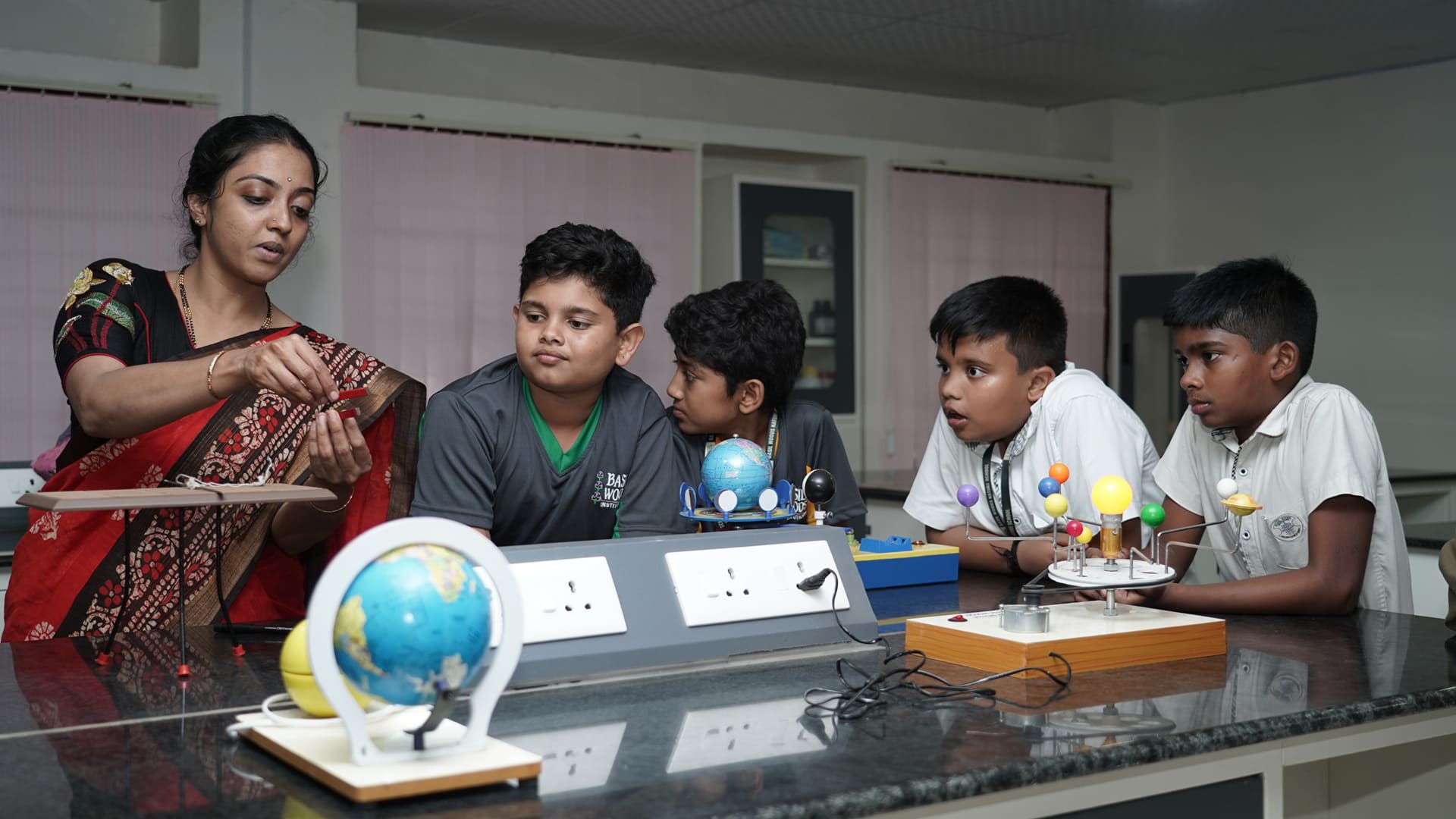
It’s worth being specific here, because the term gets used loosely. Good STEAM teaching in the early years looks like building blocks, simple sorting and pattern activities, and lots of open-ended play, all of which build the cognitive groundwork for later logical thinking. In the middle years, it starts to look like structured projects: designing a working model, running a small experiment and presenting findings, or combining a science topic with an art or storytelling element. By the senior years, it can involve robotics, basic programming, or applied engineering challenges tied to real-world problems.
What it should not look like is a single “STEAM period” bolted onto an otherwise unchanged, lectureheavy timetable. The value comes from integration, using STEAM thinking inside math class, inside social studies, inside language lessons, not from isolating it into one enrichment slot a week.
What Parents Can Do at Home
You don’t need a home robotics lab to support this. Simple building sets, encouraging your child to ask “why” and actually chase the answer together, letting them take something apart to see how it works, these all build the same muscles. Museums, science exhibitions, and even everyday problemsolving, figuring out how to fit groceries in the fridge, planning a small budget, all count as STEAM
thinking in disguise.
Is STEAM Only for Science-Minded Children?
No, and this is a common misconception. A child who loves drawing or storytelling is just as central to STEAM education as one who loves numbers. The whole point of the “arts” addition is to show that creativity and technical thinking aren’t opposites, they work best together. Some of the most interesting STEAM projects come from children who approach a science problem with a designer’s eye, or an engineering problem with a storyteller’s instinct.
Bringing It Together
Steam education for kids isn’t a passing trend or a marketing term schools slap onto their prospectus. Done well, it changes how children approach problems for the rest of their lives, less afraid of getting it wrong the first time, more comfortable testing an idea and adjusting. That kind of thinking doesn’t show up on a report card immediately, but it shows up later, in how confidently a child tackles
something genuinely new.
At Basil Woods, STEAM isn’t a once-a-week add-on, it’s woven into how we teach across subjects and grade levels as part of our academic approach. You can see how this plays out in our classrooms at basilwoodshyd.in/academics, or book a visit at basilwoodshyd.in/enquiry to watch a session in progress.