
Walk into most conversations about school admissions and you’ll hear a lot about marks, boards, and rankings. What comes up less often, but arguably matters just as much, is what a school is teaching a child about how to treat people, handle failure, and act when no one’s watching. That’s the territory value-based education occupies, and it’s getting more attention than it has in decades.
Defining Value-Based Education
Value-based education is an approach that deliberately builds character, ethics, and social responsibility into a child’s schooling, alongside academics rather than as an afterthought. It covers things like honesty, empathy, respect for others, environmental responsibility, and accountability for one’s actions. The distinction that matters here: value-based education isn’t a once-a-week moral
science period. Done properly, it shows up in how teachers handle a classroom conflict, how a school treats mistakes, and how children are taught to collaborate rather than just compete.
Why It’s Getting Renewed Attention
India’s National Education Policy 2020 places explicit weight on this, moving away from a purely academic-outcomes view of schooling toward one that treats character development as a core objective, not a side benefit. Researchers examining the policy’s provisions have pointed out that this reflects a much older thread in Indian educational thought, one that historically treated intellectual, ethical, and emotional development as parts of the same process rather than separate tracks.
There’s a practical reason this matters beyond policy language. Children today grow up with more information, more screen exposure, and more complexity to navigate than previous generations did, and academic knowledge alone doesn’t equip them to handle that well. Value-based education is really an attempt to give children an internal compass, so that good decisions come from understanding right and wrong, not just from fear of getting caught.
What Value-Based Education Actually Builds
Educators researching this area typically point to a consistent set of outcomes: stronger emotional intelligence, better collaboration and teamwork, greater resilience when things don’t go well, and a clearer sense of personal responsibility. These aren’t soft, vague ideas, they show up concretely in how a child handles a disagreement with a friend, how they respond to losing a match, or whether
they own up to a mistake instead of hiding it.
It’s worth being honest that value-based education doesn’t produce results you can see on a report card the same term. It’s a slower, cumulative process, closer to how a habit forms than how a fact gets memorised. That’s part of why it’s easy for schools to talk about it and harder to actually build it into daily practice.

What This Looks Like Done Well
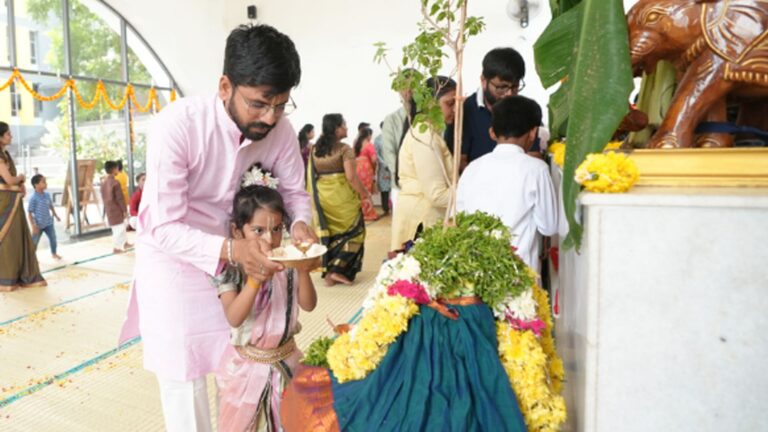
Good value education isn’t a textbook chapter read once a week and forgotten. In practice, it works best when it’s built around stories rather than lectures, since children absorb a value far more naturally through a narrative they can relate to than through a rule handed down to them. India’s own ethical and cultural traditions offer an enormous, largely untapped library of these stories, drawn from Indian heritage, festivals, and moral literature, and a well-designed values curriculum leans on this instead of inventing generic “be kind” worksheets.
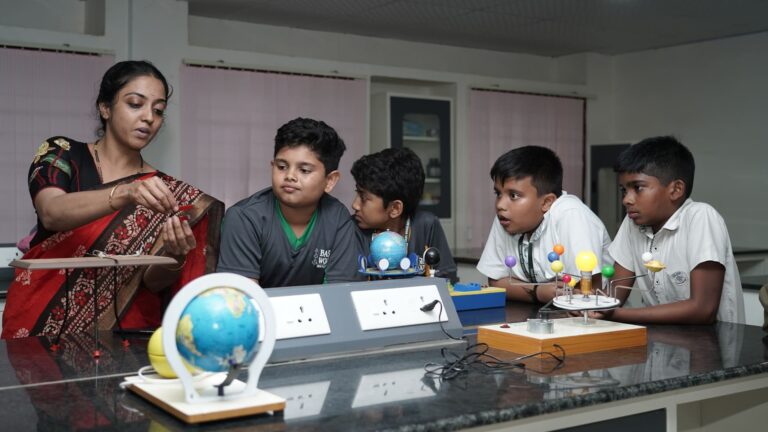
It also needs to be interactive, not one-directional. Children should be discussing, reflecting, and then applying a value through a small real activity, not just listening and moving on. For older students, particularly in the senior years, this can expand into more layered questions: how ethics, science, and a broader worldview fit together, rather than treating values education as something only for younger children.
What it shouldn’t look like is a single moral science textbook chapter, disconnected from everything else a child experiences during the school day.
A Fair Question Parents Should Ask
If a school claims to offer value-based education, it’s reasonable to ask how, specifically. Is there a structured programme with a real curriculum behind it, or is it left to individual teachers’ discretion? Is it story-based and interactive, or lecture-based? How are values reinforced outside the classroom, in the dining hall, on the sports field, during a school trip? Vague claims about “holistic development” are common in school marketing; concrete answers about daily practice are what actually tell you something.
Why It Matters Beyond School
The honest case for value-based education isn’t only about producing better students, it’s about producing adults who make good decisions when the stakes are real and no one’s grading them. Academic ability determines what a person can do; character tends to determine what they choose to do with it. Most parents, if asked directly, would say that second part matters more in the long run.
At Basil Woods, our values curriculum is delivered through structured, story-based sessions built around India’s ethical and cultural traditions, designed in partnership with the National Institute of Value Education, and woven into daily school life through our Culture Connect programme rather than confined to a single period on the timetable. Classes are interactive and reflective, not lecture-based, and children are encouraged to apply what they learn through small, real activities rather than just discuss it in theory. You can read more about how this works in practice at basilwoodshyd.in/cultureconnect, or book a campus visit at basilwoodshyd.in/enquiry to see it firsthand.