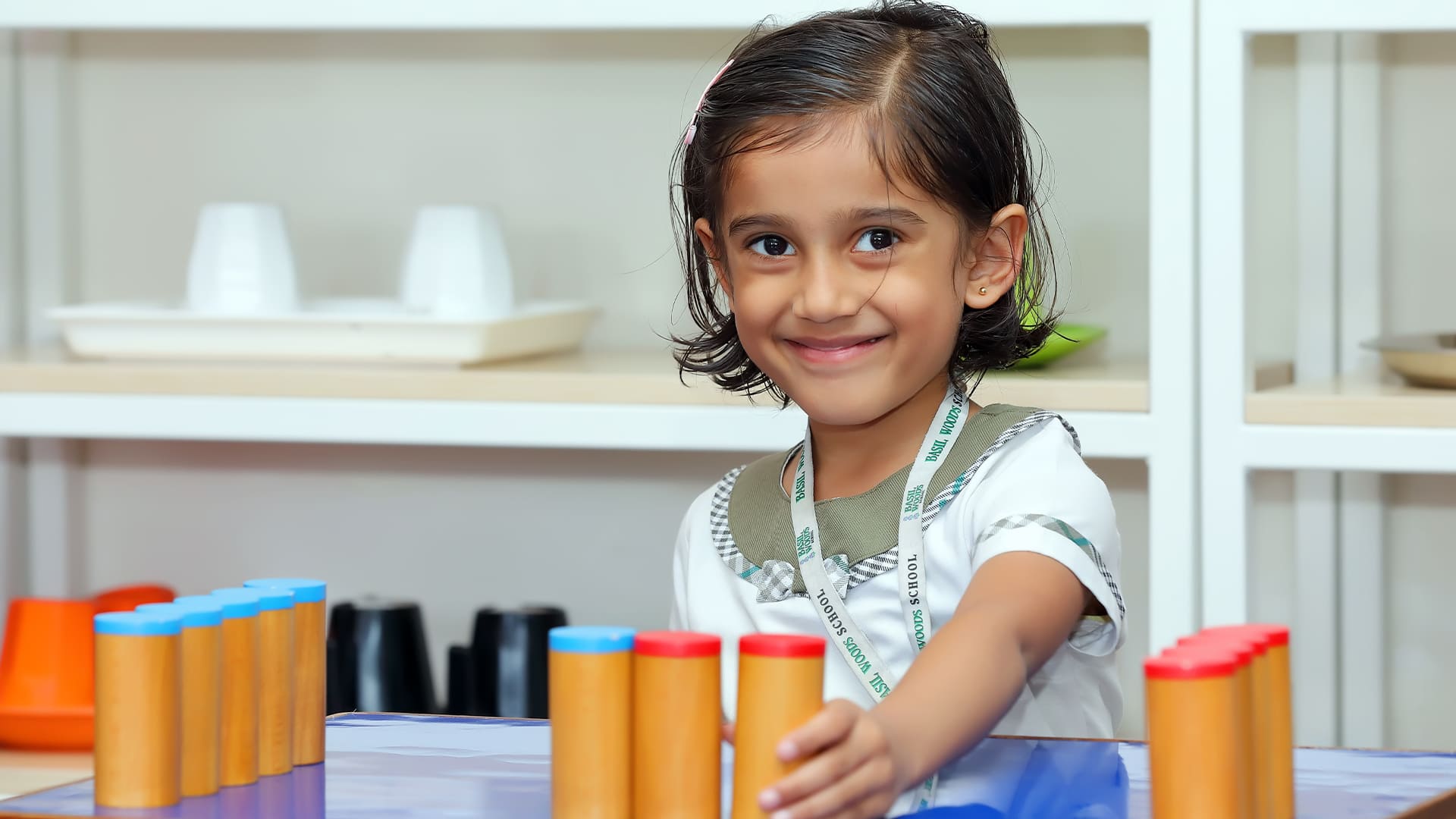
When parents think about learning, they often imagine books, worksheets, and structured lessons. But for preschoolers, learning looks very different. It happens while building towers, pretending to run a grocery store, solving puzzles, singing songs, or exploring nature. This is the power of play-based learning for preschoolers.
Research consistently shows that young children learn best through meaningful play. At Basil Woods Juniors, we believe that every game, every story, and every hands-on activity is an opportunity to build curiosity, confidence, and essential life skills.
What is Play-Based Learning?
Play-based learning is an educational approach where children learn through activities that are enjoyable, engaging, and purposeful. Instead of memorising information, children actively discover, experiment, ask questions, and solve problems.
Whether they are stacking blocks, painting, role-playing, or exploring outdoor spaces, children are developing skills that prepare them for future academic success and everyday life.
How Play Helps Children Learn Better
Builds Strong Thinking Skills
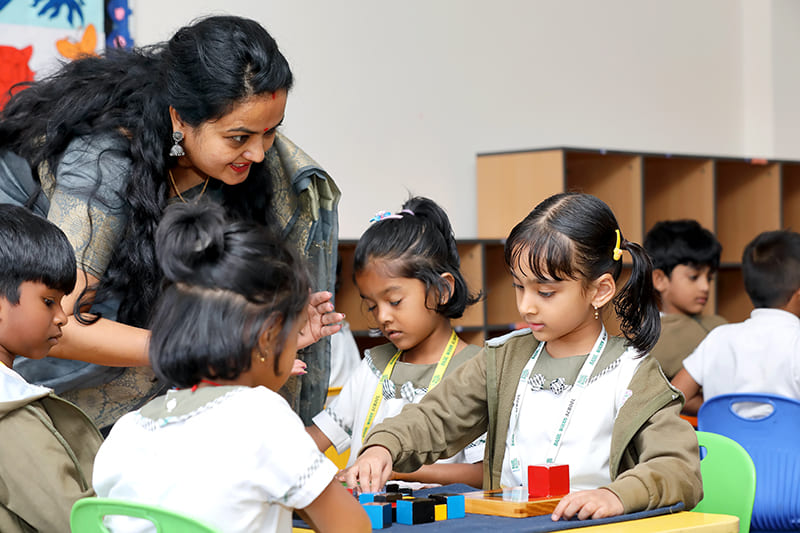
Simple activities like puzzles, sorting games, and building blocks encourage children to think critically, recognise patterns, and solve problems. These experiences strengthen memory, concentration, and early mathematical understanding.
Develops Language and Communication
During imaginative play, children naturally express ideas, ask questions, and interact with others. Storytelling, singing, conversations, and group activities help expand vocabulary while building confidence in speaking and listening.
Encourages Emotional Intelligence
Play teaches children how to understand and manage emotions. Whether they are taking turns, sharing toys, or working together on a group activity, they learn patience, empathy, cooperation, and resilience.
Strengthens Physical Development
Running, climbing, balancing, dancing, and creative movement improve both fine and gross motor skills. These activities also build coordination, confidence, and healthy habits from an early age.
Sparks Creativity and Curiosity
Open-ended play encourages children to imagine, create, and explore without fear of making mistakes. This freedom nurtures innovation, curiosity, and a lifelong love for learning.
The Basil Woods Juniors Approach
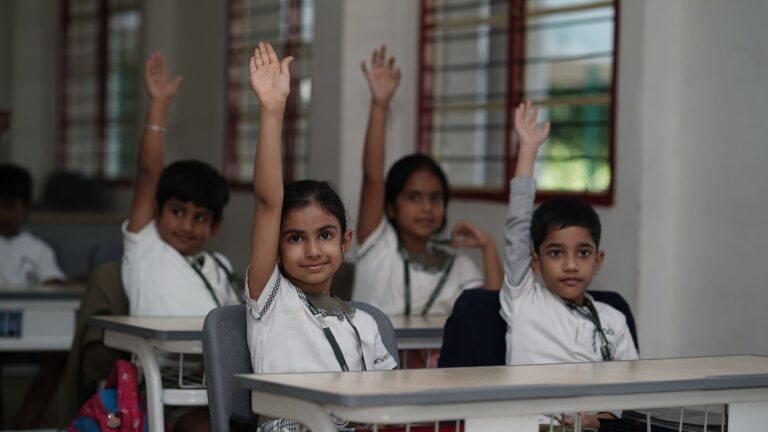
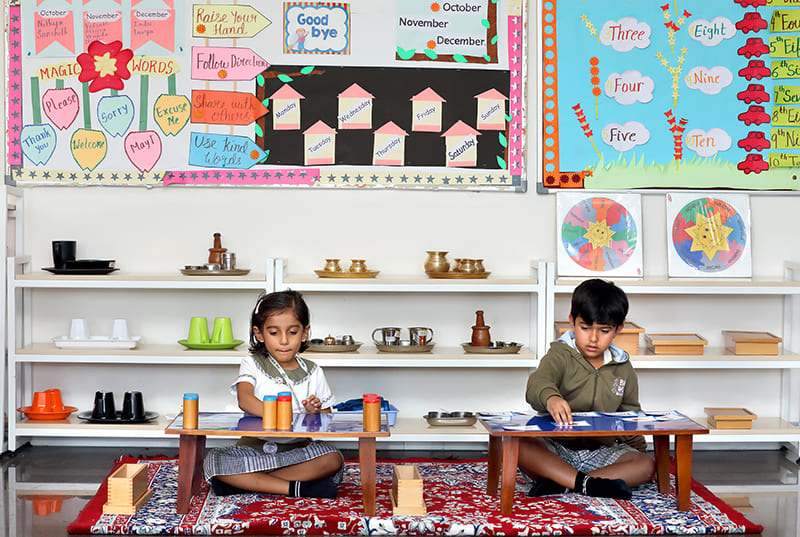
At Basil Woods Juniors, play-based learning for preschoolers is thoughtfully integrated into every part of the school day. Our classrooms are designed to inspire exploration while our teachers carefully guide children through meaningful experiences that support their overall development.
Our curriculum combines activity-based learning with our unique Four Quotient (4Q) philosophy:
- IQ develops cognitive and academic abilities.
- EQ nurtures emotional awareness and healthy relationships.
- PQ strengthens physical health and motor development.
- SQ builds values, kindness, gratitude, and character.
Every activity is designed with a purpose, ensuring children grow not only academically but also socially, emotionally, physically, and spiritually.
Learning That Lasts a Lifetime
Children may not remember every alphabet lesson or counting exercise, but they will always remember the joy of discovering something new. When learning feels exciting, children become naturally curious, confident, and eager to explore the world around them.
That is why play-based learning for preschoolers is more than just play. It lays the foundation for creativity, critical thinking, communication, emotional well-being, and lifelong success.
At Basil Woods Juniors, we believe childhood should be filled with wonder, exploration, and joyful learning because the happiest learners often become the most successful learners.